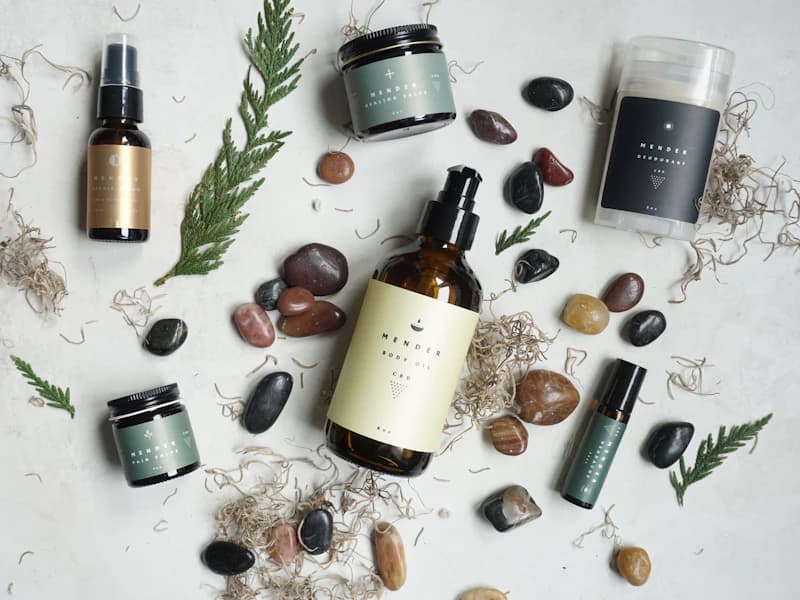
Soap is one of those quietly brilliant first businesses. People use it every single day, it costs almost nothing to make, and a beautifully branded bar sells for $8 to $14 while costing under $2 to produce. It is a consumable, so customers come back, and it photographs like a dream. If you want to know how to start a soap business in 2026, the boring products are often the best ones, and soap is exhibit A.
This soap business guide covers the methods, the safety you cannot skip, real costs, pricing, and how to get from your first batch to actual customers. By the end you will know exactly which method to start with, how to avoid the mistakes that sink new soapmakers, and how to turn a kitchen hobby into a brand people pay a premium for.
Why soap is a smart first business
Materials for a single bar run $1 to $2. Handmade bars sell for $8 to $14. That is a 70 to 85 percent gross margin on a product people literally cannot stop using. It is a repeat purchase, it is giftable, and the barrier to entry is a weekend of learning. Compare that to almost anything else and the math is hard to beat, which is why it landed on our best businesses to start in 2026 list.
There are three deeper reasons soap punches above its weight as a starter business. First, it is shelf-stable: a cured bar lasts a year or more, so you are not racing perishability the way a food business is. Second, the raw materials are cheap and widely available, which keeps your downside risk tiny when you are still figuring out what sells. Third, soap has a built-in content engine baked into the process. The pour, the swirl, and the cut are inherently watchable, so your manufacturing and your marketing are the same activity. Very few products give you that.
The flip side worth naming up front: because the barrier is low, the market is crowded. Anyone can buy a melt-and-pour base and slap a label on it. That is exactly why this guide spends as much time on niche, brand, and pricing as it does on chemistry. The soapmakers who win are not the ones with the best lather, they are the ones with the clearest story and the most disciplined margins.
Step 1: choose your method
- Melt and pour: the beginner friendly route. Buy a premade base, melt, add color and scent, pour. No lye handling, and you can sell within days.
- Cold process: making soap from scratch with oils and lye. More control and higher perceived value, but it needs safety knowledge and a four to six week cure.
- Hot process: like cold process but cooked, with a shorter cure and a rustic look.
Start with melt and pour to launch fast, then graduate to cold process once you want full creative control and a premium story.
How to actually pick between them
Think about it as a trade between speed, control, and margin. Melt and pour gets you to your first sale in days because there is no cure time and no lye. The cost is that you are buying a base someone else formulated, so your margin is a little thinner and your "from scratch" story is weaker. It is the right call if your goal this month is to validate that people will actually pay you, not to win a craft award.
Cold process is where the real money and the real moat live. You control every oil, which means you control hardness, lather, conditioning, and cost. A cold-process bar carries a genuine artisan story you can charge for. The price of entry is lye safety and a four-to-six-week cure, which means your cash is tied up in inventory that cannot sell yet. Plan for that gap.
Hot process splits the difference. Cooking the soap speeds saponification so the bar is usable in days rather than weeks, and it gives a rustic, textured look some buyers love. It is less precise for fine swirls and detailed designs, so it suits earthy, "rugged" brands more than delicate spa lines.
A practical sequence that works for most people: launch on melt and pour to prove demand and build an audience, learn cold process on the side during the cure-time-doesn't-matter weeks, then re-launch your flagship line as cold process at a higher price once you have proof people will buy.
Step 2: respect the lye
If you go cold process, you are working with sodium hydroxide, which is caustic. This is not scary, but it is serious. Goggles, gloves, good ventilation, never add water to lye (always lye to water), and keep kids and pets out. Melt and pour skips lye entirely, which is exactly why beginners start there. Learn the safety before the artistry.
A no-shortcuts safety setup
- Always lye into water, never the reverse. Adding water to lye can cause a volcanic eruption of caustic liquid. Pour the lye slowly into cold water and stir as you go.
- Protect your eyes and skin. Splash goggles (not just glasses), nitrile gloves, long sleeves, and closed shoes. Lye burns, and the early splatter is the riskiest moment.
- Ventilate. Mixing lye solution releases fumes for the first minute. Work near an open window, under a range hood, or outdoors, and avoid breathing directly over the container.
- Keep vinegar and running water nearby. Flush any skin contact with lots of water immediately. Clear kids and pets out of the space entirely while you work.
- Use dedicated, non-aluminum equipment. Lye reacts with aluminum and produces hydrogen gas. Stick to stainless steel, heavy plastic, or silicone, and never reuse those tools for food.
One more thing that quietly matters: always run your recipe through a lye calculator before you make it. Every oil saponifies at a slightly different rate, so the right amount of lye depends entirely on your exact oil blend. Guessing produces either a lye-heavy bar that burns skin or an oily bar that never hardens. Free online lye calculators exist for exactly this, and using one is non-negotiable.
Step 3: find your niche
The soap aisle is crowded, so do not sell soap. Sell an identity.
- Natural and sensitive skin: fragrance free, simple ingredients
- Luxury and spa: premium scents, elegant packaging, gift focused
- Novelty: fun shapes, colors, and scents for gifting
- Men's grooming: bold scents, masculine branding
- Themed collections: seasons, moods, or local inspiration
Your niche decides your scent palette, packaging, price, and audience. Our niche guide helps you choose.
How to pressure-test a niche before you commit
A good soap niche has three traits: a customer who is easy to picture, a reason they will pay more than grocery-store prices, and a reason they will come back. "Natural soap" fails the first test because it describes half the market. "Fragrance-free bars for parents of eczema-prone toddlers" passes all three, because you can picture the buyer, they have a real pain that justifies a premium, and they will reorder forever once a bar works for their kid.
The strongest niches in 2026 lean into specificity and identity. A regional line ("scents of the Pacific Northwest"), an occasion line (wedding-favor and bridal-shower sets), or a values line (palm-oil-free, vegan, plastic-free packaging) all give buyers a reason to choose you over the generic bar. Pick one lane and let everything else flow from it. You can always expand later, but a fuzzy launch is the most common reason new soap brands stall.
Step 4: nail your recipe before you sell
Test relentlessly. For any method you want a hard, long lasting bar, good lather, even color, and scent that survives the process. Make small test batches, label them, and track what works. Do not sell anything until you can reproduce the same quality batch after batch.
What "good" actually means for a bar of soap
Buyers judge a bar on four things, and you should measure all of them:
- Hardness and longevity. A soft bar dissolves into mush in a week and earns refund requests. Harder oils (coconut, palm or a sustainable substitute, and a touch of stearic-rich butter) build a bar that lasts.
- Lather. People equate bubbles with "clean." Balance bubbly lather with creamy, conditioning lather so the bar feels luxurious, not stripping.
- Scent retention. Some fragrances fade or even discolor after the cure. Test that the scent you sell is the scent the customer smells four weeks later, not a faint ghost of it.
- Skin feel. The bar should clean without leaving skin tight. A small "superfat" percentage of unsaponified oil handles this.
Keep a simple batch log: date, exact recipe, scent, color, cure length, and notes on how the finished bar performed. This single habit separates hobbyists from people who can scale, because when a batch turns out great you can reproduce it exactly, and when one fails you can see why.
Common mistakes that ruin early batches
- Adding too much fragrance oil. More scent is not better. Overloading can cause the soap to seize, overheat, or leave skin irritated. Stay within the recommended usage rate for each fragrance.
- Skipping the cure. Cold-process soap sold too early is soft, harsh, and short-lived. The four-to-six-week cure is not optional; it is when water evaporates and the bar becomes mild and hard.
- Unstable colorants. Some natural colorants morph in high-pH soap. Test colorants in a small batch before you build a whole product line around a look.
- Inconsistent molds and cuts. Uneven bars look amateur and weigh differently, which throws off your pricing. Use a consistent mold and a cutter for clean, uniform bars.
Step 5: build the brand
A bar of soap and a branded bar of soap are separated by a 70 percent price difference, and the only thing between them is presentation. You need a memorable name, a cohesive look, and packaging worth photographing. Skip the weeks of design wrestling. With Zentrix you describe your line and the AI generates your name, logo, palette, and live storefront, then you make the bars look luxe with AI product photography. Running a candle or skincare line too? Same flow, one brand system.
Here is the part new makers underestimate: in a crowded category, brand is the product. Two bars with identical ingredients can sell for $4 and $12 purely on name, label, and photography. Your job is to make the bar look like it belongs in a boutique, not a bake sale. That means a name that hints at your niche, a consistent color palette across every bar, and packaging that survives being held, sniffed, and photographed by a customer who then tags you.
Practically, you want all of this to feel like one coherent system rather than a pile of mismatched decisions. Describe your line in plain English to Zentrix and it produces the name, logo, color palette, and a live storefront together, so your packaging, your site, and your social presence all match from day one. That coherence is what reads as "real brand" to a customer deciding whether to trust you with $12.
Step 6: price it right
Use the standard product formula.
Cost of goods (base plus scent plus color plus packaging) times 3 to 4 equals retail.
If a bar costs you $2 all in, price it at $8 to $12. Bundle three bars as a gift set to raise average order value. Do not race to the bottom on price, since handmade soap buyers pay for quality and story, not the cheapest bar.
Don't forget the costs that hide
The 3-to-4x multiplier works only if your "cost of goods" is honest. New makers routinely price off ingredient cost alone and quietly lose money. Fold these in before you multiply:
- Packaging and labels per unit, including boxes and tissue for gift sets.
- Shipping materials and the shipping subsidy you eat on online orders.
- Marketplace and payment fees if you sell through a third party.
- Your time. If a bar takes you 15 minutes of hands-on work, that labor has to live somewhere in the price or you have built yourself a job that pays nothing.
Then lean on bundles to lift average order value without discounting. A three-bar gift set at $30 feels like a gift, not three separate $10 purchases, and it ships almost as cheaply as one bar. Seasonal sets, "try all our scents" samplers, and soap-plus-accessory bundles (a bar with a soap dish or washcloth) all raise the order size while protecting your margin. For a deeper framework on this, see our broader thinking on building a high-margin product business.
Step 7: get your first sales
- Farmers markets and craft fairs: soap sells beautifully in person, since people want to smell it.
- Short video: the pour, the cut, the cure. Soap cutting videos are weirdly addictive and perform great.
- Gift sets: lean into holidays and occasions hard.
- Local stockists: boutiques and salons love locally made soap.
Turn first sales into repeat sales
Getting the first sale is satisfying, but soap's superpower is the reorder. A bar lasts a customer three to six weeks, which means a happy buyer is a predictable, recurring purchase if you stay in front of them. The single highest-leverage move is to capture emails at every touchpoint: a sign-up sheet at the market, a checkbox at online checkout, a card in the box. Then a simple "running low? restock here" email a few weeks after purchase quietly compounds into real revenue.
In-person events are also your cheapest research. People will tell you to your face which scent makes them stop walking, which label they reach for, and which price makes them hesitate. Bring a small range, watch what sells out, and let the market vote before you commit a big batch to a scent. Pair that with short video of your process, which doubles as both marketing and proof that the soap is genuinely handmade, and you have a flywheel that costs almost nothing to run.
The legal and labeling basics
- Cosmetic labeling rules: soap marketed for cleaning has lighter rules, while soap that makes skincare claims like "treats eczema" enters cosmetic or drug territory with stricter requirements. Be careful with claims.
- Ingredient lists: include them, since many buyers have sensitivities.
- Business registration and sales tax: LLC, $50 to $500, plus a sales tax permit in most states.
- Product liability insurance: affordable and smart for anything that touches skin.
The claims trap, explained simply
The single legal mistake that gets soapmakers in trouble is making the wrong kind of claim. Say your soap "cleans" and "smells like lavender," and you are selling soap with light requirements. Say it "treats eczema," "heals acne," or "reduces wrinkles," and you have just told regulators your product is a cosmetic or even a drug, which carries far stricter rules. The fix is easy: describe what the soap is and how it feels ("gentle," "moisturizing oils," "calming scent") rather than what it cures. When in doubt, stay descriptive and avoid medical language entirely.
Beyond claims, the unglamorous basics protect you: list your ingredients so customers with allergies can make informed choices, keep your label honest, register your business so you can collect and remit sales tax, and carry product liability insurance because anything that touches skin can occasionally cause a reaction. None of this is expensive, and all of it is cheaper than the alternative. (This is general guidance, not legal advice; check the rules for your state and country before you launch.)
What it costs to start a soap business
- Supplies (first batches): $100 to $300
- Branding and packaging: $50 to $250
- Website: $0 to $50 per month
- Business registration: $50 to $500
- Insurance (optional, recommended): $200 to $500 per year
- Total to launch: $200 to $1,100
You can start melt and pour for under $200. No budget at all? Here is how to start with no money.
The reason the range is so wide is that almost every line item is a choice. You can skip insurance at first, design your own labels, sell at a single market before paying for a website, and start with a $120 melt-and-pour kit. Or you can go straight to cold process with professional packaging and a polished storefront. The smart move for most people is to start at the low end, prove that strangers will pay you, and reinvest the profit into the parts that make you look bigger.
Who this is for: hands on creators who want a high margin, repeat purchase product they can make at home and turn into a real brand.
Frequently asked questions
How much money can you make selling soap?
It depends entirely on volume and channel, but the unit economics are strong. With a $2 cost per bar and a $10 retail price, every bar nets roughly $8 before fees and your time. Sell 50 bars at a weekend market and that is a few hundred dollars in gross profit from a single day. The makers who turn it into real income do so by stacking channels (markets, online, and wholesale to local shops), pushing gift bundles to raise order value, and earning reorders. Soap is rarely a get-rich-quick play, but it is a reliable, scalable margin business.
Is it legal to sell homemade soap?
Yes, in most places true soap is legal to make and sell from home, which is part of why it is such an accessible first business. The catch is the claims you make: plain cleansing soap has light requirements, but the moment you advertise skincare benefits like treating a condition, you step into cosmetic or drug rules. Register your business, collect sales tax where required, label your ingredients, and keep your marketing descriptive rather than medical. Always confirm the specific rules for your state or country, since cottage-industry and labeling laws vary.
Should I start with melt and pour or cold process?
Start with melt and pour if your goal is to launch fast and prove people will buy. It skips lye entirely, has no cure time, and lets you sell within days. Move to cold process once you want full creative control, better margins, and a genuine from-scratch story to charge a premium for. Many successful makers run both: melt and pour for quick novelty and seasonal items, cold process for their flagship line.
How long does soap take to cure?
Cold-process soap typically cures for four to six weeks. During that time water evaporates and the bar becomes harder, milder, and longer-lasting. Hot-process soap is usable within days because cooking speeds the chemistry, though a short rest still improves it. Melt and pour needs no cure at all, which is exactly why it is the fastest route to your first sale. Plan your launch around the cure: if you are going cold process, your inventory cannot sell the day you make it.
How do I price handmade soap?
Add up your true cost per bar (base or oils, scent, color, packaging, and a slice of your labor and shipping), then multiply by three to four for retail. A $2 bar usually sells for $8 to $12. Resist the urge to undercut cheap commercial soap; your buyer is paying for quality, scent, and story, not the lowest price. Use gift sets and bundles to lift average order value instead of discounting individual bars.
What equipment do I actually need to start?
For melt and pour, very little: a soap base, a microwave or double boiler, molds, fragrance, colorant, and rubbing alcohol to pop surface bubbles. For cold process, add a digital scale, a stick blender, a heat-safe non-aluminum container for the lye solution, a thermometer, safety goggles and gloves, and molds. Most beginners can outfit a full cold-process kit for under $150, and you likely already own half of it.
How do I make my soap brand stand out?
Stop competing on "handmade soap" and compete on identity. Pick a specific niche, build a cohesive name, logo, and palette around it, and invest in packaging and photography that make the bar look boutique. In a crowded category, presentation is what justifies a premium price. You can describe your line to Zentrix and have the AI generate your brand name, logo, color system, and a live storefront together, so everything matches from your first bar to your first sale.
Quick start checklist
- Choose your method, start with melt and pour
- Learn the safety basics before handling lye
- Pick a niche and target customer
- Make and test small batches until quality is consistent
- Settle on 3 to 5 hero scents
- Build your brand name, look, and storefront
- Price with the 3 to 4 times cost multiplier and build gift sets
- Register your business and get a sales tax permit
- Launch at a market and online, and capture emails for repeats
The soap business rewards people who actually start. The methods are learnable in a weekend, the costs are low enough to absorb a few failed batches, and the margins are generous enough to fund your own growth. The makers who win are not the ones who wait for the perfect recipe; they are the ones who launch a small, focused line, listen to what sells, and reinvest. Pick your method, make a batch, and get a brand and storefront live with Zentrix so your first bar has somewhere to sell.