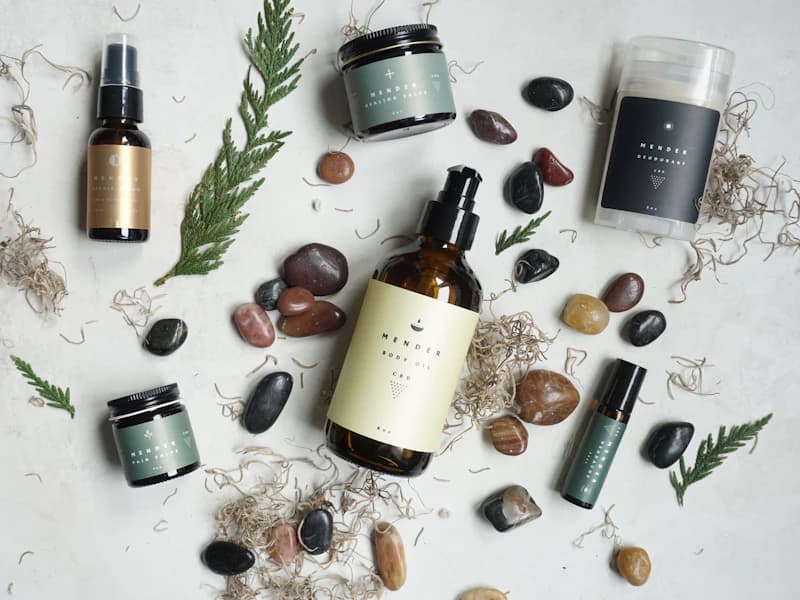
The global skincare market is projected to hit $200 billion by 2026, according to Statista. It's one of the most competitive beauty categories — and also one of the most loyal. People find a routine that works and they stick with it for years.
That loyalty is your opportunity. If you can build a product someone trusts with their skin, you earn a customer who comes back every 60 days without being asked. No retargeting ads required. But earning that trust takes more rigor than most product businesses. Unlike a phone case or a coffee mug, skincare goes on a customer's body — which means formulation, safety, and regulation all matter from day one. The good news: the same rigor that makes skincare harder to launch is exactly what makes it defensible once you do. Here's how to do it right.
Step 1: Identify Your Niche
You cannot start a skincare line for "everyone with skin." You'll get buried by brands with $10 million marketing budgets.
Pick one specific problem to solve:
- Acne-prone skin for adults in their 20s and 30s
- Hyperpigmentation in deeper skin tones
- Sensitive skin that reacts to most products
- Anti-aging for women over 50 who are done with complicated routines
- Clean skincare for kids and teens
- Barrier repair for people who've over-exfoliated
The problem you pick determines your ingredients, your formulas, your messaging, and your customer. Everything flows from here.
A useful test: can you describe your customer in a single sentence that a stranger would immediately recognize themselves in? "A 34-year-old with adult hormonal acne who's tired of harsh teenage products that strip her skin" is a niche. "Women who want better skin" is not. The narrower your definition, the cheaper it is to find your first hundred customers, because you know exactly where they already gather — which subreddits they read, which dermatologists they follow on TikTok, which ingredients they search for.
Validate before you formulate
Before spending a dollar on samples, confirm the problem is real and that people are actively looking for a solution. Three quick, free checks:
- Search demand — Use Google Trends and autocomplete to see whether people search for your problem ("fungal acne safe moisturizer," "fragrance-free retinol"). Rising or steady search volume is a green light.
- Community pain — Read r/SkincareAddiction, r/30PlusSkinCare, and ingredient-specific Discords. Note the exact words people use to describe their frustration. That language becomes your product copy.
- Competitor gaps — List the five products people in your niche already buy. What do the one- and two-star reviews complain about? Greasy texture, stinging, pilling under makeup, vague ingredient lists? Each complaint is a positioning opportunity.
If you want a structured way to pressure-test the whole concept, our guide to validating a business idea walks through cheap experiments you can run in a weekend before committing to inventory.
Step 2: Understand Your Manufacturing Options
This is the most important decision you'll make. Three main paths:
1. White Label
Buy pre-made formulas from a manufacturer, choose packaging, add your branding. Fastest and cheapest to market. The trade-off: other brands may use the exact same base formula. White label is a smart way to test a market quickly, but it's hard to defend long-term because a competitor can buy the identical product and undercut you on price.
2. Private Label with Customization
Start with a base formula and work with the manufacturer to adjust it — change the scent, add an ingredient, tweak the texture. More differentiation than white label at a moderate cost increase. This is where most successful indie brands live: a proven, stable base that's been modified enough to feel genuinely yours.
3. Custom Formulation
Work with a cosmetic chemist or contract manufacturer to develop a formula from scratch. Most differentiated, highest upfront cost ($1,500–$10,000+ for formulation, plus testing and compliance). This is where brands like Drunk Elephant and The Ordinary started. Custom formulation also means longer timelines — expect three to nine months including stability testing — so it's rarely the right first move unless your entire brand premise hinges on a proprietary formula.
For most beginners, private label with customization is the sweet spot. You get a proven base, speed to market, and real room to differentiate.
A practical rule of thumb: white label to learn the market, private label to build a brand, custom formulation only once you have repeat customers telling you exactly what they wish existed.
Step 3: Find a Manufacturer
Look for manufacturers with cosmetic GMP (Good Manufacturing Practice) certification. This ensures quality controls are actually in place.
Where to find them:
- Cosmetic Executive Women (CEW) supplier directory
- Alibaba (filter for verified, gold suppliers with skincare certifications)
- Beauty Independent's supplier database
- US contract manufacturers: RainShadow Labs, Trilogy Laboratories, Nox Bellow Cosmetics
Questions to ask every manufacturer:
- What's your MOQ (minimum order quantity)?
- Do you provide Certificates of Analysis?
- Can you accommodate custom formulation or modifications?
- What stability testing and shelf-life data do you have?
- Can you share a list of current or past brands you've worked with?
- Are you registered with the FDA as a cosmetic facility under MoCRA?
- Do you handle fill, label application, and shrink-wrap, or is that on me?
Order samples. Test them on your own skin. Have trusted people test them. Do not rush this step.
Understanding MOQs and cash flow
MOQ is where a lot of first-time founders get blindsided. Domestic private-label manufacturers often require 500 to 1,000 units per SKU, while overseas suppliers may demand even more. At a $6 landed cost, a 1,000-unit run is a $6,000 commitment for a single product — before packaging, shipping, or marketing. This is the single biggest reason to launch with one hero product rather than a five-piece collection: five SKUs at a 500-unit MOQ is 2,500 units of inventory and a five-figure bet on guesses.
Ask whether the manufacturer offers a smaller "pilot" or "trial" run. Some will produce 100–250 units at a higher per-unit cost so you can test the market without drowning in inventory. Paying a premium to de-risk your first batch is almost always worth it.
Domestic vs. overseas manufacturing
US-based manufacturers cost more per unit but offer faster shipping, easier communication, simpler compliance, and a "Made in USA" claim that many skincare buyers value. Overseas manufacturers (often in South Korea, which leads the world in cosmetic R&D) can be cheaper and more innovative on texture and formulation, but you'll wait longer, pay for ocean or air freight, navigate customs, and carry more compliance burden yourself. For a first product where speed and control matter most, domestic is usually the safer choice.
Step 4: Understand Skincare Regulations
This is not optional. Skincare is regulated by the FDA in the United States.
Key rules:
- You don't need FDA approval before selling most cosmetics, but you must comply with the Fair Packaging and Labeling Act
- Labels must include: product name, net quantity, ingredient list (descending order of concentration), manufacturer/distributor name and address
- If your product makes drug-like claims ("reduces wrinkles," "treats acne"), it may be regulated as an OTC drug with additional compliance requirements
- The Modernization of Cosmetics Regulation Act (MoCRA), signed in 2022, expanded FDA oversight — register your facility and list products with the FDA
If selling in the EU, regulations are stricter. You'll need a Responsible Person and a Cosmetic Product Safety Report.
The cosmetic-vs-drug line, in plain English
This distinction trips up more new brands than any other rule, so it's worth getting concrete. A cosmetic cleanses, beautifies, or alters appearance. A drug is intended to treat or prevent disease or affect the structure or function of the body. The same jar of cream can be either, depending entirely on the claims you print on the label and the marketing around it.
- "Hydrates and softens skin" — cosmetic claim, fine.
- "Reduces the appearance of fine lines" — cosmetic claim ("appearance"), generally fine.
- "Treats acne" or "contains SPF 30" — these are drug claims, and the product becomes an OTC drug subject to monograph requirements, specific active-ingredient rules, and additional labeling.
Sunscreens and acne treatments are the two categories most likely to pull a beginner into OTC-drug territory. If your hero product needs to make those claims, budget for the extra compliance — or choose a first product (a hydrating serum, a barrier cream, a gentle cleanser) that stays firmly on the cosmetic side of the line.
What MoCRA actually requires
Under MoCRA, the responsible party for a cosmetic must register their manufacturing facility with the FDA and list each product and its ingredients. There are also requirements around adverse-event recordkeeping and safety substantiation — meaning you should keep documentation that your product is safe for its intended use. Your contract manufacturer often handles facility registration if they fill the product, but confirm in writing who is responsible for what. Don't assume.
Also required:
- LLC or business entity
- Product liability insurance (critical for anything applied to skin)
- Dermatologist testing or patch testing for claims
None of this is meant to scare you off — thousands of indie brands navigate it every year. But skincare is one category where cutting corners on compliance can end your business, so treat it as a non-negotiable line item rather than an afterthought. Setting up the business entity, basic legal docs, and structure is exactly the kind of groundwork an all-in-one platform can handle for you, so it's not something you have to assemble from scratch.
Step 5: Create Packaging That Builds Trust
In skincare, packaging is part of the product. It communicates safety, efficacy, and positioning.
- Airless pumps — Best for active ingredients (Vitamin C, retinol) that degrade with air exposure
- Frosted or dark glass — Protects photosensitive formulas
- Tubes vs. jars — Jars introduce contamination risk; tubes are more hygienic
- Labels — Clean, ingredient-forward design builds trust. List hero ingredients prominently.
Budget $1–$5 per unit for packaging depending on quality and quantity.
Function before aesthetics
It's tempting to fall in love with a beautiful jar, but packaging in skincare is a chemistry decision first and a design decision second. A vitamin C serum in a clear glass dropper bottle will oxidize and turn brown on the shelf, and an unhappy customer who watches your "fresh" product visibly degrade will never reorder. Match the package to the formula: airless or opaque for unstable actives, dark glass for photosensitive ingredients, and dispensing mechanisms that minimize how much air and skin contact the product over its life.
Two practical details that quietly build trust: include a clear batch code and Period After Opening (PAO) symbol (the little open-jar icon with "12M" or "6M"), and make sure your secondary packaging survives shipping. A leaking pump or a cracked jar arriving at someone's door is a refund and a lost customer, no matter how good the formula is.
Step 6: Price Your Skincare Products
Skincare has some of the highest acceptable price-to-cost ratios in retail.
- Formula / manufacturing: $4–$15 per unit
- Packaging: $1–$5 per unit
- Labels and inserts: $0.50–$1.50 per unit
- Total landed cost: $5.50–$21.50 per unit
- Retail price: $25–$85
- Gross margin: 50–80%
Don't undercharge. Skincare buyers associate price with efficacy. A $12 moisturizer raises questions. A $38 moisturizer feels credible.
Why gross margin isn't your real profit
A 70% gross margin sounds luxurious until you remember everything it has to cover. Out of every retail dollar, your landed cost is only the first deduction. After that come payment processing (roughly 3%), shipping and fulfillment, returns and the occasional damaged unit, and — by far the largest line item for most new brands — customer acquisition. If it costs you $25 in ads to acquire a customer who buys a $38 product with a $12 cost, your first sale is barely breakeven.
This is the single most important reason skincare can be a fantastic business: the repeat purchase. That same customer reorders every 60 days, and the second, third, and fourth purchases carry no acquisition cost. Skincare lives or dies on lifetime value, not first-order profit. Price and budget accordingly — and consider a subscription or replenishment option from day one to lock in that recurring revenue.
Step 7: Build Your Brand and Story
Your brand in skincare isn't just visual — it's built on trust and ingredient transparency.
- A founder story — Who you are and why you created this. Personal stories connect powerfully in skincare.
- Ingredient philosophy — Clean? Science-backed? Minimalist? Botanical? Be clear and stay consistent.
- Educational content — Explain your ingredients. Explain the skin barrier. Explain why you avoid certain things. Education builds trust faster than any ad.
- Before/after content — Nothing sells skincare like visible results. Nothing.
Honesty is a competitive advantage
The fastest way to lose trust in skincare is to over-promise. Customers in this category are unusually sophisticated — many can read an INCI ingredient list better than you can. Claiming your $30 serum "erases wrinkles overnight" will earn you returns and one-star reviews, not loyalty. Instead, set realistic expectations ("most users see smoother texture in four weeks of consistent use"), be transparent about what's in the bottle and why, and never disparage an ingredient just to sell against it. The brands that win long-term are the ones customers feel they can believe. For more on translating that into a memorable identity, see our guide to naming your business.
Step 8: Launch and Sell
Start with one hero product. One serum. One moisturizer. One cleanser. Do that product exceptionally well before even thinking about a full line.
Build your store and collect email addresses before launch. Platforms like Zentrix can help you get your branded store live quickly without dealing with technical setup. If you need a step-by-step roadmap, our idea-to-revenue guide covers the full journey from concept to first sale.
Launch to a small, warm audience first. Get reviews. Get before/after photos. Then scale. Ready to move fast? Our 48-hour launch plan shows you how to compress the timeline.
Your pre-launch and launch sequence
A skincare launch works best when you build anticipation before there's anything to buy. A simple sequence that consistently works for indie brands:
- Build a waitlist. Put up a landing page with your founder story and a "notify me at launch" form weeks before product arrives. An email list of warm prospects is the cheapest sales channel you'll ever have.
- Seed samples. Send free units to a small group of people in your niche — micro-influencers, friends with the exact skin concern you target, members of the communities you researched in Step 1. Ask for honest feedback and permission to share their results.
- Collect proof. Gather before/after photos, written testimonials, and short video reviews. In skincare, this social proof is worth more than any ad creative you could write yourself.
- Launch to your list first. Open sales to your waitlist before going public. Early reviews and a "sold out the first batch" story create momentum.
- Then scale with content. Once you have proof and reviews, turn educational and before/after content into your primary growth engine. Skincare is one of the most content-driven categories on the internet — lean into it.
Where Zentrix fits
The hardest part of launching used to be everything around the product: standing up a branded store, writing the legal pages, structuring the business, finding suppliers, and getting your first marketing assets live. Zentrix turns a plain-English idea ("a fragrance-free barrier-repair serum for over-exfoliated skin") into a complete, live e-commerce business in minutes — brand, store, legal docs, supplier connections, and marketing — and it's free to start. That lets you spend your energy where it actually matters in skincare: nailing the formula and earning trust. You can start building your store on Zentrix today.
Who this is for: Founders who care about formulation quality and are willing to invest the extra time in compliance and testing to build a skincare brand that lasts.
Common Mistakes to Avoid
Most failed skincare lines don't fail because of a bad formula. They fail for predictable, avoidable reasons:
- Launching a full collection instead of a hero product. Five SKUs means five times the inventory risk and a diluted message. One great product earns reviews and reorders that fund the next.
- Making drug claims by accident. A casual "clears acne" in your Instagram caption can reclassify your cosmetic as an OTC drug. Audit every claim across your label, site, and ads.
- Skipping product liability insurance. Anything applied to skin carries reaction risk. One allergic-reaction claim without coverage can wipe out a small brand.
- Choosing packaging that destroys the formula. Clear glass for vitamin C, jars for sensitive actives — small mistakes that visibly degrade your product on the shelf.
- Underpricing. A price too low signals "ineffective" in skincare and starves you of the margin you need to acquire customers.
- Ignoring lifetime value math. Treating the first order as the whole business instead of the start of a 60-day reorder cycle.
- Not testing on real skin before committing to an MOQ. A formula that pills, stings, or smells off won't survive contact with reviewers — find out before you order 1,000 units.
Frequently asked questions
How much does it cost to start a skincare line?
A lean launch with a single white-label or private-label hero product typically runs $3,000 to $15,000, depending on your manufacturer's MOQ, packaging quality, and whether you customize the formula. That range covers your first inventory run, packaging and labels, basic compliance and insurance, and a starter store. Custom formulation from scratch pushes the total higher — often $20,000+ — because of formulation fees, stability testing, and larger minimums. Starting with one product and a smaller pilot run is the most reliable way to keep that first number low.
Do I need FDA approval to sell skincare?
For most cosmetics, no — the FDA does not pre-approve cosmetic products before they go on sale. You do, however, have to comply with labeling laws and, under MoCRA, register your facility and list your products with the FDA. The exception is if your product makes drug-like claims (treating acne, providing SPF), which can make it an OTC drug subject to additional rules. When in doubt, keep your claims cosmetic and consult a compliance specialist before launch.
How long does it take to launch a skincare brand?
With white label or private label, you can realistically go from decision to live store in 30 to 90 days, with the manufacturer's lead time being the main bottleneck. Custom formulation stretches that to six months or more once you include formulation rounds and stability testing. The non-product pieces — store, branding, legal pages, and business setup — can now be handled in minutes with the right platform, so manufacturing timelines, not technical setup, define your schedule.
What should my first product be?
Choose the single product that best solves your niche's core problem and stays on the cosmetic side of regulation. A hydrating serum, a barrier-repair moisturizer, or a gentle cleanser are all strong first products: broadly useful, easy to formulate well, and free of the drug-claim complications that come with sunscreens and acne treatments. Master one product, earn reviews and reorders, then expand into adjacent items your customers actually ask for.
White label vs. private label — which should I choose?
If your goal is to test a market quickly and cheaply, white label gets you live fastest. If you want to build a defensible brand, private label with customization is the better long-term choice because competitors can't simply buy the identical product. Most founders are best served starting with private label: a proven base formula, modified just enough to be genuinely yours, at a cost only modestly above white label.
How do I price a skincare product?
Calculate your full landed cost (formula + packaging + labels), then price at roughly 4–6x that cost, landing most products in the $25–$85 range. Resist the urge to compete on price — in skincare, a price that's too low reads as low efficacy and leaves you no room to fund customer acquisition. Remember that your real profit comes from repeat purchases over the customer's lifetime, not the first order.
Can I start a skincare line from home?
Yes — most indie founders never touch the product physically. Your contract manufacturer formulates, fills, and often labels the product, then ships finished units to you or directly to a fulfillment center. Your job is brand, marketing, customer relationships, and compliance oversight. You can run the entire operation from a laptop, which is exactly why the category is so accessible to first-time founders.
Quick Start Checklist
- Choose your skincare niche and target customer
- Validate demand through search trends, communities, and competitor review gaps
- Define your hero ingredient or formula philosophy
- Research and contact 3–5 manufacturers, request samples
- Test samples on real skin (yours + trusted people)
- Confirm MOQ and ask about a smaller pilot run
- Select packaging that fits your brand and protects the formula
- Verify FDA compliance requirements for your specific product type
- Audit every claim to stay on the cosmetic side of the drug line
- Create your brand identity — name, visual design, ingredient story
- Set your retail price at 4–6x cost
- Register your LLC and get product liability insurance
- Build your online store and start a pre-launch waitlist
- Start with one hero product — do it exceptionally
- Collect before/after photos and reviews before scaling
Skincare rewards founders who do the work others skip — the validation, the testing, the compliance, the patience to perfect one product. Get those right and you'll have something rare: a brand customers trust with their skin, and reorder without being asked. When you're ready to turn your idea into a live store, build it with Zentrix and put your energy into the formula and the customer instead of the plumbing.