Americans spend more than $3.14 billion on candles every year. That's not a niche hobby market — that's a serious industry with room for small players who know what they're doing. The barrier to entry is absurdly low, the margins are fat, and you can run the whole operation from your kitchen table.
But here's the thing: plenty of people start candle businesses and ghost within three months. Not because the market dried up — because they skipped the boring fundamentals. They bought a $40 starter kit, poured a dozen lumpy jars, posted twice on Instagram, and quit when nobody bought. The ones who last treat candles like a real business from day one. This is the guide that doesn't skip anything.
By the end, you'll know exactly what to buy, how to test so your candles don't tunnel, how to price so you actually keep money, how to handle the legal side without a lawyer, and how to get your first ten sales. Let's get into it.
Why Candles Are a Smart First Business
You can start making candles with less than $300. Most handmade candles sell for $15–$40 and cost $3–$8 to produce. That's a 60–80% gross margin before selling costs. Find me another product business with numbers like that and a learning curve you can conquer in a weekend.
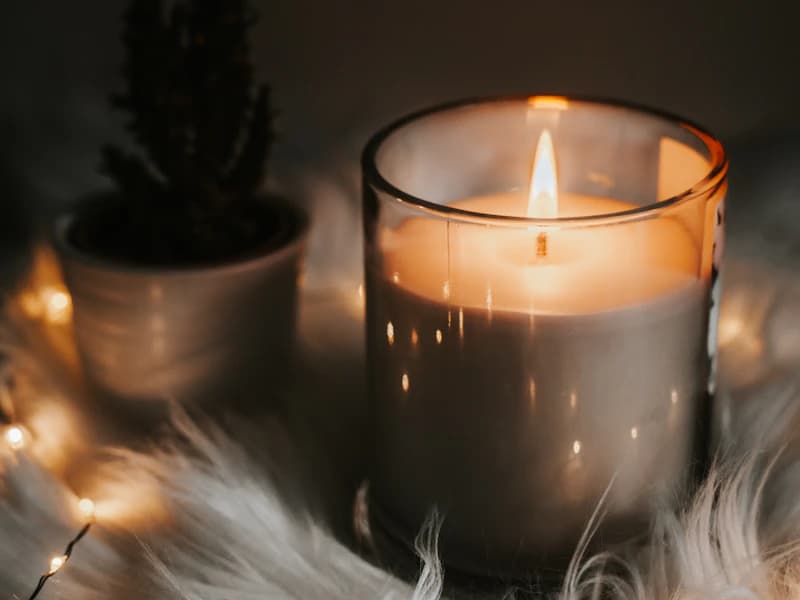
They also photograph beautifully, which matters when your entire storefront lives on a screen. A candle in soft natural light, beside a coffee cup and a stack of books, sells the feeling — not just the wax. That's a real advantage when you're competing for attention on a small phone screen.
A few more reasons candles work as a first product:
- Repeat purchases are built in. Candles get used up. A customer who loves your scent comes back in six weeks, unlike someone who buys a single tote bag and never returns.
- The gifting market is enormous. Candles are the default "I didn't know what to get you but I wanted it to feel thoughtful" gift. That means seasonal spikes you can plan around.
- You can make them in small batches. No minimum order quantities from a factory, no $5,000 inventory gamble. Pour ten, sell ten, reinvest, pour twenty.
- The skills transfer. If candles take off, the same wax and fragrance knowledge unlocks wax melts, room sprays, and reed diffusers — a whole product line from one craft.
The catch? There's a lot of noise. The candles that actually sell are the ones with a clear identity — a scent story, a vibe, a reason to exist beyond "smells nice." A jar of unscented vanilla soy wax with a Times New Roman label is invisible. A candle called "First Apartment" that smells like fresh paint, cardboard boxes, and possibility is a story someone wants to give away.
Step 1: Find Your Niche
Don't try to sell candles to everyone. Pick a corner of the market and own it. A focused brand is easier to market, easier to price at a premium, and easier for customers to remember and recommend.
Some angles that actually work:
- Mood-based — candles named after feelings ("Sunday Morning," "3AM Overthinking")
- Location-inspired — scents that evoke a specific city, season, or landscape
- Aesthetic-driven — dark academia, cottagecore, minimalist, luxury
- Functional — sleep candles, focus candles, stress-relief blends
- Gifting — candles built around occasions (birthdays, new home, breakups)
Your niche shapes everything downstream: scent choices, packaging, brand name, price point, audience. Get this right and the rest gets dramatically easier.
How to pressure-test a niche before you commit
Don't fall in love with the first idea. Run it through three quick checks:
- Can you picture the exact person who buys it? If your answer is "anyone who likes candles," it's too broad. "A 28-year-old who decorates with neutrals and listens to lo-fi while studying" is a customer you can find and speak to.
- Is there an existing community you can reach? Cottagecore has subreddits, hashtags, and Pinterest boards. A niche tied to a community already gathering online is a niche you can market into for free.
- Does it support a premium price? "Cheap candles" is a race to the bottom against big-box retail. "Hand-poured candles for your reading nook" justifies $26. Always pick the angle that lets you charge more, not less.
One common mistake: picking a niche so narrow that only fifty people on Earth want it. "Candles inspired by 1990s Finnish death metal album covers" is memorable but probably not a business. You want specific enough to stand out, broad enough to scale.
Step 2: Learn the Craft (It Doesn't Take Long)
You don't need to be a chemist. The basics of candle making take a weekend to learn, maybe two if you're being thorough. The process is genuinely simple: melt wax, add fragrance at the right temperature, set a wick, pour, cure. The skill is in the details, and the details are learnable.
What You'll Need to Start
- Wax — Soy wax is the most popular for home candle making. Burns cleaner than paraffin and is easier to work with. Coconut wax is premium and pricier. Beeswax burns longest but has its own natural scent. Many sellers use a coconut-soy blend for a smoother top and stronger scent throw.
- Fragrance oils — Not essential oils. Fragrance oils are specifically blended for candle performance. Budget $20–$40 for a handful of scents to test. Check the supplier's recommended fragrance load (usually 6–10% by weight) and flash point.
- Wicks — Cotton wicks are standard. Size matters more than you'd think — wrong wick and the candle tunnels or burns dangerously hot. Wood wicks give a cozy crackle but need a different size and more careful testing.
- Containers — Glass jars, tins, or concrete vessels. Restaurant supply stores sell affordable glass jars that look great.
- Thermometer, pour pitcher, scale — Measure by weight, not volume. A cheap digital kitchen scale that reads to the gram is non-negotiable.
Starter supply cost: $150–$300 for your first batch of 20–30 candles.
Order from wholesale suppliers like CandleScience, Brambleberry, or Peak Candle Supplies. Get sample sizes before committing to bulk. Buy a wick sampler pack rather than guessing — the right wick is the single biggest factor in whether your candle burns properly, and it depends on your specific wax, jar diameter, and fragrance.
The single most expensive mistake new makers make is buying ten pounds of one wick size before testing. Buy small, test everything, then scale up the combination that works.
Step 3: Nail Your Formula Before You Sell Anything
Test before you sell. I'm serious about this. A candle that tunnels or smells like nothing when lit will generate refund requests and one-star reviews that follow you forever. Your reputation is built on the first hundred candles, so make them right.
The two most common failures: tunneling (wax pools only in the center) and weak scent throw (the candle doesn't smell when burning). Both are fixable, but both require actual testing.
The Testing Checklist
- Burn test each candle for 4 hours minimum
- Check the melt pool — it should reach edge-to-edge within 2 hours
- Smell the room after 30 minutes — that's your hot throw
- Let the candle cool and smell it unlit — that's your cold throw
- Test in different temperatures (warm room vs. cold room)
Only move to selling once your formula is consistent across multiple batches. Consistency is the real product. A candle that's perfect once and mediocre the next time is worse than one that's consistently good, because customers can't trust it.
Cure time: the step everyone skips
Soy and coconut candles need to cure — sit untouched after pouring — before they reach full scent throw. For soy, that's typically 1–2 weeks. If you burn-test a candle the day after pouring and the scent seems weak, don't immediately add more fragrance. Cure it first, then test. Plenty of makers have over-fragranced their whole line trying to fix a problem that cure time would have solved on its own. Over-fragrancing wastes money and can cause oil to sweat out of the wax surface.
Common formula mistakes and how to fix them
- Tunneling — Your wick is too small for the jar. Size up one wick and retest. Also teach customers to burn until the pool reaches the edge on the first burn; that prevents "memory ring" tunneling.
- Mushrooming wick (black carbon ball on top) — Wick is too large, or fragrance load is too high. Size down or reduce oil.
- Frosting (white crystals on soy) — Cosmetic, harmless, and natural to soy. Pour at the right temperature and let candles cool slowly to reduce it, but don't lose sleep over it.
- Sinkholes and uneven tops — Cooled too fast. Pour slightly hotter, warm your jars first, and cool at room temperature away from drafts.
- Weak hot throw — Cure longer, confirm your fragrance load, and make sure the fragrance is rated for the wax you're using.
Step 4: Build a Brand, Not Just a Product
This is where most people underinvest — and pay for it later. Your brand is why someone buys your $24 candle instead of a $6 one from Target.
- Name — Memorable, easy to spell, searchable. Say it out loud five times. Does it sound like a real brand? Check that the domain and social handles are available before you fall in love with it.
- Visual identity — Pick 2–3 colors and commit. Your label, website, packaging, Instagram — all one visual language.
- Label design — Clean, readable, tells the story. Canva works early on. When you're ready to invest, a designer on Fiverr or 99designs runs $100–$300. Include required safety wording (more on that below) so your label is both pretty and compliant.
- Packaging — The unboxing matters. Tissue paper, a thank-you card, a sticker. None of it is expensive. All of it creates a moment.
Branding is also the part that paralyzes the most people. Picking a name, colors, a logo, and writing a story that ties it together can eat weeks if you let it. This is exactly the kind of work an AI platform can collapse into minutes. With Zentrix, you describe your candle idea in plain English — "moody candles for late-night readers" — and it generates a brand name, logo, color palette, label-ready copy, and a matching store, so you can pour your energy into the candles instead of staring at a blank canvas.
Step 5: Price Your Candles Correctly
Here's the formula most beginners get wrong:
Cost of goods (wax + fragrance + wick + jar + label) x 3–4 = retail price
If your candle costs $7 to make, price it at $21–$28. Don't go lower to compete. Lower prices attract bargain shoppers who never become loyal customers.
Factor in:
- Transaction fees (usually 2.9% + $0.30 per sale)
- Shipping supplies
- Your time (yes, this counts)
- Wholesale margin if you ever sell to boutiques (typically 50% of retail)
Why the 3–4x multiplier exists
That multiplier isn't markup greed — it's survival math. The gap between your material cost and retail price has to cover transaction fees, packaging, shipping you eat on "free shipping" orders, breakage, returns, marketing, and your own labor. If you only mark up 2x, those real costs swallow your profit and you discover you've been running a charity. The 3–4x rule keeps the business solvent after the hidden costs land.
Don't forget shipping math
Candles are heavy and fragile, which makes shipping one of the sneakiest profit killers in this business. A $24 candle can cost $8–$12 to ship safely with proper padding. You have three sane options: build shipping into the price and advertise "free shipping," charge it transparently at checkout, or set a free-shipping threshold (like $50) that nudges customers to buy two. Whatever you choose, weigh and box a real candle and check live carrier rates before you set prices, not after your first order.
Step 6: Set Up Your Online Store
You need a place to sell. Here are your options:
- Your own website — Best long-term play. You own the customer relationship. Platforms like Zentrix can help you go from idea to live store without the technical headaches.
- Online marketplaces — Built-in traffic, but they take fees and you don't own customer data.
- Instagram/TikTok shop — Great for discovery, terrible as your only sales channel.
Start with your own store. Use social media to drive traffic to it. If you need a framework for the full journey from concept to revenue, our step-by-step guide breaks it all down.
The reason your own store beats relying on a marketplace is ownership. On a marketplace, you rent attention and the platform keeps the customer's email, dictates the fees, and can change the rules overnight. On your own site, every sale builds an asset you control — your customer list, your brand, your data. Marketplaces and social shops are great discovery channels; treat them as the top of your funnel and funnel everyone back to a store you own.
The good news is that "build your own store" no longer means hiring a developer or wrestling with templates for a week. Describe your candle business to Zentrix and it builds a complete, live storefront — product pages, checkout, branding, even supplier connections and the legal docs — in minutes, free to start. That removes the single most common reason candle makers stall out: the website never gets finished.
Step 7: Get Your First Sales
The first 10 sales are always the hardest. Here's how real people get them:
- Friends and family — Not shameful. Get 5–10 honest reviews from people who'll give you real feedback.
- Local markets — Farmer's markets and craft fairs are cheap ways to get face-to-face customer reactions.
- Content — Behind-the-scenes pour videos perform extremely well on TikTok and Reels. Show the making, the packaging, the testing.
- Email list — Start building from day one. Even 50 engaged subscribers is valuable.
Why local markets are a cheat code early on
A craft fair table is the fastest customer-research lab you'll ever run. In one afternoon you'll watch dozens of people pick up your candles, sniff them, react, and either buy or walk away. You'll learn which scents make people say "oh wow" and which get a polite nod, which price points cause flinching, and which label designs get picked up first. That feedback would take months to gather online. Bring a sign-up sheet or a QR code to your store so every visitor can become an email subscriber even if they don't buy that day.
Photography makes or breaks the online sale
Since customers can't smell your candle through a screen, your photos are doing the selling. You don't need a studio — a window with natural light, a clean surface, and a phone are enough. Shoot the candle lit and unlit, show the scale next to a familiar object, and stage it in the setting your niche imagines (a nightstand, a desk, a bathtub edge). Consistent, bright, uncluttered photos make a $24 candle look like a $24 candle instead of a craft-table afterthought.
Step 8: Handle the Legal Basics
- Business registration — LLC is standard for small product businesses. Cost varies by state, usually $50–$500.
- EIN — Free from the IRS website. Takes 10 minutes.
- Sales tax permit — Required in most states for product sales. Check your state's requirements.
- Product liability insurance — Candles are a fire product. Basic coverage runs $300–$600/year and is absolutely worth it.
Candle-specific labeling and safety rules
Candles carry a few legal obligations beyond a generic product. In the U.S., candle labels are expected to carry fire-safety warnings — the industry-standard language tells users to never leave a burning candle unattended, keep it away from things that catch fire, and keep it out of reach of children and pets. Many makers follow the widely used ASTM safety-label guidance and include burn instructions and a wick-trimming reminder. Putting this on every label isn't just compliance theater; it's the documentation that protects you if something ever goes wrong.
If you sell across state lines, remember that sales-tax obligations can follow your sales volume into other states (economic nexus), so revisit your tax setup as you grow. None of this is a reason to stall — it's a checklist, not a wall. An LLC, an EIN, a sales-tax permit, the right label warnings, and basic liability insurance cover the vast majority of small candle businesses. When you build your store with Zentrix, the platform can generate the standard legal documents alongside your storefront, so the paperwork stops being the thing that scares you off.
What Does It Cost to Start a Candle Business?
- Supplies (first batch) — $150–$300
- Branding & labels — $50–$300
- Website — $0–$50/month
- Business registration — $50–$500
- Packaging — $50–$100
- Total to launch — $300–$1,250
You can start for under $500 if you keep it lean. Not sure you even have that? Here's how to start a business with no money.
Who this is for: First-time entrepreneurs who want a hands-on, creative product business they can launch from home with minimal upfront investment.
How Much Can a Candle Business Actually Make?
Let's run honest numbers instead of hype. Say each candle costs you $7 to make and sells for $24. That's $17 of gross profit before fees and shipping — call it $12–$14 in your pocket after a transaction fee and packaging. Sell 50 candles a month and you're netting roughly $600–$700. Sell 200 and you're at $2,400–$2,800. Those aren't life-changing numbers on day one, but they compound: repeat buyers, wholesale accounts with boutiques, and seasonal gifting spikes (holidays alone can double a month) are how a kitchen-table operation grows into real income.
The makers who scale do three things consistently: they keep their formula rock-solid so reviews stay glowing, they reinvest early profit into more inventory and better photos instead of cashing out, and they build an email list so every launch starts with warm demand instead of cold silence. Treat the first six months as buying your education with small batches, and the business that survives that stretch tends to keep climbing.
Frequently Asked Questions
Is a candle business actually profitable?
Yes, candles carry strong margins — typically 60–80% gross profit, since a candle that costs $3–$8 to make often retails for $15–$40. The profitability question isn't really about the product; it's about whether you price correctly (use the 3–4x multiplier), account for shipping and fees, and build repeat customers. Plenty of makers run profitable side incomes from home, and some scale into full-time businesses, but only after they nail consistency and pricing.
How much money do I need to start?
You can start lean for under $500, and a more comfortable launch with branding, registration, and packaging runs $300–$1,250. The biggest variable is business registration, which ranges from about $50 to $500 depending on your state. If money is genuinely tight, you can pre-sell a small batch at a local market to fund your first wholesale supply order, and you can read how to start a business with no money for more low-cost paths.
Do I need a license to sell candles?
In most U.S. states you'll want a business registration (an LLC is standard), a free EIN from the IRS, and a sales-tax permit to collect and remit sales tax. There's no special "candle license" federally, but your products must carry the proper fire-safety warning labels, and product liability insurance is strongly recommended because candles are a fire product. Check your specific state and city requirements, since rules vary by location.
Soy, coconut, or paraffin wax — which should I use?
Soy is the most beginner-friendly: clean-burning, easy to work with, and widely loved by customers who want a "natural" product. Coconut and coconut-soy blends are premium options with excellent scent throw and a smoother finish, at a higher cost. Paraffin holds and throws fragrance very well and is cheaper, but it has a less "clean" reputation with conscious buyers. Many sellers land on a coconut-soy blend as the sweet spot between performance and positioning.
Why does my candle tunnel or not smell strong?
Tunneling almost always means your wick is too small for the jar — size up one wick and retest, and teach customers to let the first burn reach the edge. Weak scent throw usually comes from skipping cure time (soy needs 1–2 weeks), an insufficient fragrance load, or a fragrance not rated for your wax. Fix the variables one at a time and burn-test after each change rather than adjusting everything at once.
How long does it take to launch a candle business?
The making is fast, but a responsible launch is gated by testing and cure time. Realistically: a weekend to learn the craft, a few weeks to test formulas and let candles cure, and a few days to set up branding, legal basics, and your store. So a thoughtful launch is roughly 3–6 weeks from kit to first sale. The store and branding portion is the part you can compress most — an AI platform like Zentrix can build your brand and live storefront in minutes, leaving you to focus the timeline on what truly can't be rushed: getting the candle right.
Can I run a candle business from home?
Yes — that's the norm for new candle makers. A kitchen or garage workspace, good ventilation, and basic fire safety are enough to get started. Just check your local zoning and any homeowners' or renters' rules about home-based businesses, and keep your candle-making area clean and away from where you eat. As you grow, you can move into a dedicated room or small studio space.
Quick Start Checklist
- Choose your niche and target customer
- Order sample wax, wicks, and fragrance oils
- Make and burn-test 10–20 candles
- Settle on 3–5 hero scents
- Create your brand name, colors, and label design
- Register your business and get an EIN
- Set up your online store
- Price using the 3–4x cost multiplier
- Photograph your candles (natural light, clean backgrounds)
- Launch with a small batch and get your first 10 reviews
- Post content consistently showing your process
The candle business rewards people who do the unglamorous fundamentals — test their formula, price with discipline, label for safety, and actually finish their store. If the store-and-brand part is where you tend to stall, let Zentrix turn your plain-English idea into a complete, live candle business — brand, storefront, suppliers, marketing, and legal docs — in minutes, free to start. Then go pour something worth lighting.